Saturday, August 31, 2013

REVIEW: The Republic of Thieves by Scott Lynch

Firstly, to anyone out there who has been waiting to read The Republic of Thieves since finishing Red Seas Under Red Skies in 2007 ... my sincerest apologies to you. I on the other hand, read them both in the last two weeks. I mention this only partly as a glib taunt, but also because the lack of wait and anticipation colours my view in much the same way it did for my reviews of A Song of Ice and Fire, compared to those who waiting years between installments.

This is a series that has definitely been slow to grow on me. I found The Lies of Locke Lamora somewhat unremarkable and it took more than half of Red Seas to really start getting into a position of favour. I hit the ground running with Thieves, which picks up seamlessly from the events of book two, which was great for me, in much the same way as an accelerating getaway car avoids the long arm of the law.

But to the actual review! Thieves follows an almost identical formula from it's two predecessors, alternating between past and present. In this case, the past returns us to a time when the Gentlemen Bastards are still under the tutelage of Father Chains except that this time, lo and behold, we finally learn all about the mysterious Sabetha. It is not surprising in fact, that this whole book, in both timelines, revolves around Sabetha, or rather, her relationship with Locke.

All things considered, the choice to put off this part of the story until now worked quite well. The mystery of Sabetha was only referenced lightly in previous books; enough to create some suspense, but not nearly enough to frustrate or impede the story at hand. What I really loved was being able to go back and once again experience the characters (such as Calo and Galdo) that have since departed the story - there's nothing better than the joy of experiencing something that you thought lost. My only issue with Lynch's formula for each novel is that I feel that these 'past' events should have affected or at least have been referenced in 'present' events of previous books. While there are no major oversights, it still does feel a little bit like Lynch is creating or adding history retroactively.

The present day arc is equally as entertaining and flows smoothly alongside its past counterpart. Lynch cleverly mirrors both storylines; both telling of the kindling and rekindling of Locke and Sabetha's relationship respectively.

Locke Lamora continues to shine as the golden boy of this series and more and more brings to mind a younger and perhaps more adventurous Tyrion Lannister. Locke's unfailing wit reaches new heights in this installment and as things go from bad to worse, so too does his regard for his own well-being. This translates directly for us as the reader, to some downright laugh out loud moments. Even in his exposition, Lynch doesn't hold back on the colourful language.

Sabetha still remains a bit of a mystery to me and I can't help but feel only some of it can be put down to 'it's because she's a woman OoOoOoO.' Her and Locke obviously have a complicated relationship, but when you get down to the nitty gritty, I still can't figure out why. She seems to be incapable of handling even the slightest argument, instead choosing to flee the continent at any given moment. It all seems a bit too convenient for me.

The standalone highlight of this book is Lynch's masterful use of prose and vocabulary, making for a thoroughly crafted and intelligent read. I can't really elaborate more or give it higher praise than that, other than by saying he has the writer's equivalent of the comic timing of the world's best comedian. When the character's pause, you pause, when the action is happening, your adrenaline starts going and you read god damn faster!

The world of Locke Lamora continues to expand within the new settings of Karthain and Espara. While Lynch has never been one to spend copious amount of time describing the environment in detail, a colourful and unique world is built nonetheless. I think that by the end of the series the protagonists will have taken us through every city, one by one, book by book.

The tone of Thieves really surprised me and I actually found it very light on, especially compared to book two. Red Seas had us in dire straits (see what I did there) and managed to get some real emotional hooks in. This book not only felt briefer, but a lot safer. Although it could be seen as a nice respite it certainly makes Thieves stand out as a transitional book in a larger series, rather than a milestone in it's own right - a shame considering the six-year wait fans have endured.

I don't know how or why, but I was under the impression that Thieves was the last of a trilogy. Imagine my surprise when I encountered a shock ending, riddled with foreshadowing and catastrophic potential and then ask my good friend Google who tells me there are in fact seven books. Ladies and gentlemen, we are in for the long haul. And in that case, Lynch definitely needs to shake up the formula before things get downright repetitive and boring.

Which brings me to my biggest criticism of not only this book, but the series in general and certainly it's biggest downfall. Lynch ticks all the right boxes as I have mentioned above but somehow I'm still not hooked; there is no fire. I am definitely not aching to read the next book. Don't get me wrong, I will be sure to read it to get my next dose of scathing Lamora humour, but not because I care about the fate of the characters or story. I can't put my finger on why exactly this is the case, but it's a pretty major drawback. It's certainly a combination of feelings I have not experienced before.

I think if you have enjoyed the series so far then it is worth continuing with it; The Republic of Thieves maintains the elements that you have grown to love and gives you another shot of Lamora goodness (or wickedness). I'll be looking out for book four, The Thorn of Emberlain!

This is a review of an advanced reading copy supplied by the publisher. The Republic of Thieves is expected to be published on October 8th, 2013.

Saturday, August 24, 2013

REVIEW: Red Seas Under Red Skies by Scott Lynch

I wasn't a huge fan of The Lies of Locke Lamora and I remember writing in my review that I would probably only read Red Seas Under Red Skies when I had nothing better to do. I was given an ARC for The Republic of Thieves, book three in this series, and thought I better do the right thing and you know, read the series in order.

I'm happy to say that I am now sold on the Locke Lamora franchise.

It was a slow start however. I found that almost the first half of Red Seas featured the some of the same elements of Lies that turned me off - chiefly, that it just didn't make me care about anything or anyone. I was never able to empathise with or experience the humanity of Locke or Jean. Sure they're hilariously witty and fabulous characters in their own regard, but I could have walked away from the book at any moment and not felt a pang of regret or curiosity. The Spire heist also felt very familiar to the Salvara gig in Lies.

The 'flashback' storytelling makes a return in this installment, but it by and large more successful than in book one, where it was just darn frustrating. Luckily (for me) this was abandoned by half way through, leaving us with a clear, linear chronology, as I think the whole series should have been.

There's a point in the story when events take a swift turn left off the road and go careening into the sea, which let's face it was to be expected. There's an ocean on the cover after all. To begin with I'm not sure how I felt about this ... it seemed like Lynch was doing a cut and run on the story so far, getting bored with current events and taking a sudden interest in all things nautical. I found myself thinking, "Ugh, how long is this going to take?".

However, that's where things finally got interesting. Firstly, we got some great fresh characters that weren't absurdly rich or powerful pompous asses with targets on their foreheads. And females at that too! Locke and Jean's relationship really starts to develop and that in turn increases the depth of their characters ten-fold. There's even a love interest, which was a highlight for me in this book.

The last fifth of this book was sheer brilliance. Lynch masterfully combines an incredible and mind-boggling triumph with more than a few tragic moments for our protagonists that had me considering whether I was going to put the book down and have a 'moment'.

Lynch's wit shown vicariously through Locke is prodigious and definitely on par with authors like Terry Pratchett. I mentioned this in my review for Lies but I'll say it again, Locke really is a protagonist for the ages. He's like those naughty kids in class who you know you shouldn't laugh at, but you can't help yourself because they're so inappropriately hilarious. 

Red Seas Under Red Skies was a big step up for me from The Lies of Locke Lamora, with definite growth evident in all areas of the story. It did take quite a while to warm up, but I guess I can say in the end it was worth it. This isn't a fantastically groundbreaking novel or series, especially if you're looking for something really fantastical to bite your teeth into, but it does offer excellent prose and intelligent humour abound. I'll be moving straight onto Republic of Thieves, which I must admit seems a luxury as some fans have been waiting six years since Red Seas was released ... sucks to be them!

Sunday, August 4, 2013

REVIEW: Emperor of Thorns by Mark Lawrence

This was one of my most anticipated books of 2013 after reading Prince of Thorns and King of Thorns last year and wow did it live up to expectations! It takes a certain kind of book to keep me reading until 1:00am and this is one of them.

Bravery is a quality that I regard highly when it comes to novels, and The Broken Empire trilogy is oozing with it, both in terms of Lawrence's writing and the infamous protagonist, Jorg Ancrath. I was so pleased to see that even though some goodness and maturity had crept into Jorg as he grew older, he retained his ruthless and somewhat sociopathic tendencies that so endeared me to him. There is something so satisfying about being constantly caught off guard by a protagonist, particularly one written in first person. There are some truly delicious scenes (almost always involving a smattering of gruesome murder) that got my adrenaline going every time.

The structure of Emperor of Thorns is similar to it's predecessors, alternating between present and past events in a way that expertly reveals facts just in time to be of use, while eliminating premature spoilers. Some events in EoT take place before those in KoT and are used to flesh out and explain the shock ending to book two. Genius!

The world building in this installment introduces much more information about this post-apocalyptic Earth, creating stronger links to the now ancient past before 'The Day of A Thousand Suns'. This ticked so many boxes for me and my obsession with anything eschatological. Lawrence becomes more generous with detail and the story begins to rely more heavily on technology as well as real-world references, particularly geographical ones. There is even a comical inclusion involving a janitor. 

I did feel like to elements of the story that were introduced in this book and then became crucial to the conclusion arrived a little late to be fully credible, such as Kai Summerson and the 'sworn'. The conclusion was undeniably fantastic with some great choices and balance by Lawrence, although I couldn't help but feel it was a little too fantastical a climax for a story that was so grounded and gritty. I also questioned the level of skill and intelligence some characters, Jorg included, acquired at such a ridiculously young age.

The Broken Empire trilogy has undoubtedly become of my favourite series to date, up there with the works of Brandon Sanderson and George R. R. Martin. I was constantly impressed with the wickedly fast pace, the humour and wit, the fascinating story in an epic post-apocalyptic world and most of all, arguably the most engaging protagonist I have ever encountered. Here's to you Mark Lawrence!

Tuesday, July 2, 2013

REVIEW: The Crimson Crown by Cinda Williams Chima

The Crimson Crown is an absolutely brilliant conclusion to the Seven Realms series by Cinda Williams Chima. I've thoroughly enjoyed this series and my only continual criticism is that it isn't long enough.

Elements that irked me from book three, The Gray Wolf Throne, were swiftly remedied in this installment. It felt as if Chima had held off all the good bits for the final book, leaving the penultimate novel a little safe and uneventful. The character of Crow for instance, finally became an integral part of things and his mysterious past revealed, although admittedly with little fanfare.

Like its predecessors, The Crimson Crown is fast-moving, easy to read, easy to love and well thought out. The plot is relatively simple, but absolutely water-tight, allowing the reader to fully immerse themselves without the slightest interruption to the suspension of disbelief. This is a great book to sit down with for a day-long reading session (I did 8 hours today).

Chima does tend to skimp a bit on any kind of conflict, even though there is quite a lot of potential for it (there being a war going on and all). There is some half-hearted murdering and an attempt at some hostage situations, but it gets nowhere gritty enough and is glossed over a little. Of course this may just be the author aiming at a more YA audience.

All of the characters are instantly loveable, if more than a little archetypal. Raisa and Han make the perfect protagonists, backed up with some great secondary characters like Cat and Fire Dancer.

But the best thing about this series as I have mentioned is how easy it is to read and enjoy. After being immersed in Bradley P. Beaulieu's Lays of Anuskaya, which requires constant attention, it was really nice to not have to do any extra thinking. Not that that's always desirable, just an observation of this series in general. Give it a go for engaging, entertaining and fast read!

Friday, June 28, 2013

REVIEW: The Flames of Shadam Khoreh by Bradley P. Beaulieu

Concisely: this story is brilliant and you should definitely read the entire trilogy.

The Flames of Shadam Khoreh is an intensely satisfying and captivating read and a great ending to this series. Beaulieu has crafted an incredibly mature and complex story that seemingly never takes the easy way out. It was refreshing to experience characters that have changes of heart, who get things wrong and even at times, lead the reader completely astray with their conjecture. 

For me this book was a much truer reflection of humanity, which is more of a tangled web rather than a single thread. At times the story felt messy and unclear but I appreciated this for the complexity and touch of realism it gave.

While The Winds of Khalakovo dealt primarily with the politicking and conflict between and within the Grand Duchy and the Maharrat, The Straits of Galahesh and then more so The Flames of Shadam Khoreh not only bring more factions to the party, but begin to deal with the fate of the world on a grand, cosmic level - very similarly to Sanderson's Mistborn trilogy. While I felt this was a great and natural progression for the story, I did miss the days of Winds, which I think is by far the best installment in this series. I would have been quite satisfied the remain in the realm of the courts of Anuskaya and seeing how that panned out, but instead the story takes vast leaps and bounds into infinitely bigger territory.

This is where it falls down a little for me. The protagonists in this series are great; Nikandr, Atiana, Nasim, Styophan, all consistent and well formed. However it is the secondary characters and antagonists that remain thoroughly confusing to me. Sukharam, Kaleh, Sariya, Bahett, Ushai ... all are so ill-defined that it actually seems that their presence is required only as plot devices when the need arises. Their motivations and allegiances change more often than the Prime Minister of Australia does and with very little justification. One moment Kaleh is a ruthless killer supporting Muqallad and Sariya and then she isn't and then she is and then she's is an innocent girl who's siding with the good guys ... Admittedly in some of these examples the characters are playing a ruse, but still. I mean, what the hell Ushai? WHAT IS YOUR DEAL!?

I swear some characters are brought along for the ride just to be petulant and/or obtuse.

This brings about problems in the story that I mentioned in my review of Straits, where it seems like Beaulieu has only a tentative grip on the hugely multifaceted magic system and tends to cut corners to position things where he needs them.

Taking all that into consideration, Flames is still brilliant and a credit to the fantasy genre. There are many strengths in this book I haven't even touched on (mostly because I brought them up in reviews of the two prequels) such as the exquisite use of language and names, impressive world-building and incredibly rich cultures that have been ingrained in the characters and story.

I will definitely be reading more of Beaulieu and you should too!

Monday, June 10, 2013

REVIEW: The Straits of Galahesh by Bradley P. Beaulieu

It really took me a long time to get through this, not because of the book itself but because of my lack of reading time due to my various choreographic projects. But I finally found some free time this weekend and polished it off.

After reading and loving The Winds of Khalakovo I had high expectations for The Straits of Galahesh, some of which were met and some not. The brilliant things about this book were so easy to overlook because they resumed seamlessly from where they left off in Winds and because of the confident manner in which Beaulieu employed them.

The use of Russian culture and language was once again an absolute highlight, allowing this series to completely standout from a genre that is all about inventing a plethora or original place and character names. Unlike Winds, I found I was completely across the entire cast of characters and even most of the duchies/islands/cities/mountains/palotzas, which I have to admit made the second installment in the trilogy a lot easier to maneuver through.

The world of Straits is not described with great depth, yet it is still incredibly rich and well built and like most elements of the series, fresh. Built into the geography itself is (one of) the magic systems that I also found intriguing - matriarchs of each royal family who can enter the aether, which along with the spires, assist with the flight of the airships.

The story crafted by Beaulieu in Straits is complex, original, captivating and successful on many levels, however for me there were some things that really let it down. I have to preface this by saying that I, or my reading and understanding, may possibly be to blame and I stand ready to be corrected!

It seemed to be that Beaulieu had some pretty big plot holes in this one - well, not so much holes as parts that were totally contradictory or made little logical sense. Of course we take into consideration that magic is, well, magic and in essence is mysterious and unexplainable. But that's no get out of jail free. Worst of all were some examples where Beaulieu *seemed* to demonstrate that he didn't have a real grasp over elements of his own story.

The role of the akhoz was always dubious. They were created to stabilise the rift over Ghayavand, but the theory behind this is never explained at all and they then became a multipurpose tool and carted out for this and that ceremony. Then there is a conveniently easy ritual between Khamal and an akhoz which has such a huge effect with very little reasoning behind it. Yet (without giving too much away) when Sariya and Muqallad perform the same ritual with Nasim (a choice in itself that has no logic) it has an outcome that does not align with Khamal's at all. 

There are even just silly little things, like when one protagonist has to kill someone to achieve his goal, even though it is plain to every character in the scene that if he waited approximately 3.4 seconds longer, it wouldn't actually be necessary. It's OK though, because apparently everyone who is killed can be magically unkilled and keep living a little longer. Even more ridiculous is the fact that this protagonist develops the ability to stop time and somehow doesn't kill the bad guy who is an arms length away. But the bad guys can control anyone's mind at will ... they just choose not to sometimes ...

It's stuff like that that belongs in bad, overpriced Hollywood fantasy epics. It makes my blood boil.

Other than that I was still very confused about a few things, chiefly Sariya's true intentions and Muqallad's goals, but I think some of that came down to both my understanding of the text and Beaulieu's intentional vagueness (ie, saving it for later). There were a lot of twists and double-crossing which was great and made for a keep-you-guessing plot, but I don't feel like it was concluded very well.

While these provided some epic eye-roll moments for me, I still really enjoyed the essential story and craftsmanship of Straits and I was never even close to a moment where I was prepared to give up or anything of the like. 

I'm now a total BPB fan and will be moving straight onto The Flames of Shadam Khoreh to finish of the series. I would totally recommend that all fantasy fans give this series a go, just be prepared for some irksome moments if you're an anally retentive want-to-know-it-all like me!

Friday, March 1, 2013

REVIEW: Going Postal by Terry Pratchett

It's been a very long time since I've ready a Discworld novel ... I started buying them and rereading them from the beginning in these lovely smart black covers. However, I've only ever read about a third of them in total, and I remember a friend really liking this one, so I skipped a few.

I also have to add that I've been on a bit of a reading hiatus and there is only one entity to blame: Pokemon. For some reason or another I have become heavily addicted to my Pokemon Black 2 game for the DS, brought on by the revelation that I can connect to the Internet and open up a whole other realm of possibilities, much to the dismay of my Pokemon-hating partner.

Anywho, I did get around to finishing off Going Postal, which I have to say stands up there with the best of the Discworld novels. I mean, pretty much anything featuring Vetinari is a winner for me as he is the epitome of the dry-as-a-nun's-vagina-humour that Pratchett does oh so very well.
"This woman might have been two women. She certainly had the cubic capacity and, since she was dressed entirely in white, looked rather like an iceberg. But chillier. And with sails. And with a headdress starched to a cutting edge. Two smaller women stood behind and on either side of her, in definite danger of being crushed if she stepped backwards."
I have become aware of the fact that most male protagonists of Pratchett's are in essence quite similar, as well as the use of the same humour book to book, and so even though I have loved and admired the Discworld series from a young age, I find myself in constant fear of finding it repetitive and tired. I mean, it hasn't happened quite yet, but no longer do I cry with laughter as I used to (I merely chuckle inwardly).

I did enjoy reading from the viewpoint of Moist von Lipwig, who while also constantly aware of the madness of the world around him, isn't quite so passive and downright petrified as a character like Rincewind. He likes to take charge and make the impossible possible, and if you can't, well it was impossible to begin with right?

The biggest highlight of the book was the use of the best pun I have to say I have ever come across in 'Deliver Us' at which I 'lost my shit'. I was a little disappointed at the turn of events part way through in which said delivering was rendered not applicable, however the thread of the story remained satisfying and relevant.

Even though Discworld is entirely fictional, I can't help but see the mirror that it holds up to the real world - and it's a brutally honest one. I have a feeling that if everyone in the world thought like Mr. Terry Pratchett, then it would be a hell of lot better a place. Not only would we be calling a spade a spade, but the spade would then not be offended by being called a spade (rather than it's preferred name, manual handled digging device); none of this PC bull crap.

So really, a very rambling and non-informative not-really-a-review. Ain't nobody got time for actually analyzing Discworld. Alright, back to Pokemon!

Sunday, February 3, 2013

REVIEW: Vengeance by Ian Irvine

It is with a large amount of sadness that I say that this is one of the most disappointing reads I have ever encountered. Irvine has for many years been an author I have held in high esteem, if not one of my favourites, for his Three Worlds saga. Apart from being the first book I ever bought, The View From the Mirror series had such a profound effect on me (I even did an independent study on it in high school) and so I was really looking forward to a new work by Irvine.

To put it bluntly, this book felt like it was written by an inexperienced teenager. Nearly every element of Vengeance was so clumsy and inconsistent, I had to pause at least once every two pages to roll my eyes or wrinkle my nose with distaste. I even completely gave up a quarter of the way through and after a week's break, had to force myself to finish it.

Rix is by far the most perplexing protagonist in the history of everything. Even by the end I had no idea what his character actually was. His reactions and reasoning are so ridiculous in some scenes, it sounds like he is being narrated by a six year old girl. 

Many of the books problems come from the pace. In two pages, Rix lusts after another character, swears to remain chaste, meets said character, leers, becomes revolted by her and then randomly rides away, leaving his companion behind for no discernible reason other than it helps the plot along. Absolutely nothing about the characters is precedented or follows through other than Tobry's 'mortal fear of shifters', which Irvine mentions no less than fifty bajillion times.

There are even many situations where the characters leave a climactic and dire situation, which should leave them emotionally and mentally if not physically wounded, and yet mere hours later they are chilling on the couch with wine. Absolutely zero consistency in anyway shape or form.

Don't even get me started on the gaping plot holes, not the least of which is a glaringly obvious oversight in the chronology of things which leaves a good sixty year gap in a part of the backstory.

Vengeance in some ways is very similar to Irvine's previous work; he definitely knows how to stick it to his protagonists, getting them in sticky (that's putting it lightly) situation again and again without reprieve. However, while I think this really worked in the Three Worlds saga, it was overkilled in Vengeance to the point where it became exasperating and unbelievable.

The story itself, while improving dramatically in the last half when elements finally started coming together, was unnecessarily complicated in parts and vastly underdeveloped in others. The terminology introduced in Cython was ridiculously confusing and more than a little naff - actually a lot of things in this book were naff ... like naming the volcanoes 'the vomits'.

The greatest problem I had was that in fact I believed the antagonists to be in the right and began rooting for them ... and it wasn't done in any kind of clever 'there are no clearly good or evil' way either, it was just that the protagonists were clearly on the side that started the whole thing and were in the wrong. 

Were there any good things about Vengeance? I have to admit that by the last half I was a lot more invested in the story and it became generally easier to read, although whether this was because it had actually gotten better or that I had just become accustomed to it, I'm not sure. Tali is a character is far more consistent and interesting and was honestly this books saving grace - she reminded me quite a lot of Karan and Tiaan, two of Irvine's previous strong female protagonists.

By the end of the book I was really ready for it all to wrap up, and it could have, except Irvine then throws in some extremely late minute curve balls, setting up for the next two books. I do feel like I want to continue with the story, but only out of obligation rather than because I actually enjoyed it.

So other than harbouring some bitter disappointment, I am now genuinely perplexed as to how an author can produce works of such vastly different quality ... one friend suggested that he got a ghost writer to do it ... it wouldn't surprise me.

Tuesday, January 1, 2013

2012 in Retrospect

So it's been a big reading year for me, literally reading double the amount of books that I read in 2011. This probably has a lot to do with not studying the final year of my degree, which involved over 50 contact hours a week. 

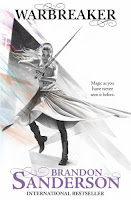
Obviously there aren't enough books here to make up a top ten or some such list and I even struggle to pick my top/favourite read for the year (usually my favourite book is the one I most recently finished). I can pick a few standouts however. Firstly I have to mention the A Song of Ice and Fire series (an obvious choice) but one that I think is always understated. Warbreaker by Brandon Sanderson, Mockingjay by Suzanne Collins, Prince of Thorns by Mark Lawrence and The Blinding Knife were my favourites for the year.

I don't think 2013 will bring another doubling of books read (unless I quit my job) but I will be aiming for a similar amount. I've been thinking for a while that this year I want to tackle the Malazan Book of the Fallen series.

A visual list is below. Happy New Year everyone!


Saturday, December 29, 2012

REVIEW: The Daylight War by Peter V. Brett

If you are like me, you have been been awaiting the release of The Daylight War for the last two and a half years and have been contemplating ringing in sick to work when you finally get your hands on a copy. Luckily for me my reception day job pretty much means I stand around and read for eight hours a day, so no 'gastro' or 'dead relative' excuses necessary!

For those who did read The Desert Spear in early 2010, the first thing I would recommend is a reread, or at least a quick skim, which is what I did. The first speed bump I found was that I couldn't remember the specifics of any of the Krasian terms (like the difference between dal'Sharum, kai'Sharum and kha'Sharum). Never fear! The Daylight War comes with a nifty glossary at the back, giving you succinct definitions for all the terminology, plus the extensive range of relatives to boot. Unfortunately for me I didn't discover this until I finished the book, but at least now I can pass on the advice.

A large chunk of the beginning of The Daylight War is devoted to the back story of Inevera (Damajah, and Jardir's wife), much like Jardir's in book two. I know many readers became bogged down in the large amount of time spent on Jardir's life and the ins and outs of The Desert Spear, and unfortunately I think you guys are in for much of the same. Personally I love every'ting (badoom-ch!) Krasian and could have happily read about Jardir for the entire book. While large parts of Inevera's story are interesting and incredibly insightful into the ways of the dama'ting, it can get a little repetitive, especially when some scenes reoccur word for word from The Desert Spear.

I felt that Arlen began to change significantly in this book, and perhaps not for the better. Deciding to shed his mysterious ways in an effort to shake this darn title of 'Deliverer' the commoners have labelled him with, he quickly goes from dark and mysterious hooded man to straw-chewing hillbilly faster than you can say 'apple pie'. Arlen and Renna were always a bit rural from memory, but Brett really lays it on thick with more abbreviated words than you can shake a stick at. 

At the same time however, Arlen (and Jardir) develop some cool new super powers, becoming even more mysterious and Deliverer-like. Pro: they're super awesome. Con: They kinda just seem to come out of nowhere, like Brett only just now thought them up but pretends they've actually been there for a while and the only reason we don't know is because no one thought to bring them up. It does also get a smidge deus ex machina, and the narrative itself begins to rely on these new powers to reveal key details. Brett saves himself a little by making the enemies even stronger, preventing Arlen from simply cleaning up the corelings like last night's dishes.

Leesha is interesting yet annoying at the same time. While she's a strong character and looked to as a leader, she remains indecisive and more than a little lost especially when it comes to her love-life, mooning over one guy, while missing another and sleeping with a third ... and fourth. I couldn't tell if she had the characteristic definition of a wad of gum, or whether she was actually incredibly complex with some really meaty flaws.
We learn quite a lot more about the core and the mind demons from the end of The Desert Spear, which strangely turned the whole conflict between humans and demons from a one sided battle of humans vs nature, to a fully-fledged two sided war between two sentient races. 

Brett's prose and flow remains virtually flawless, providing for a smooth read during which you don't feel guilty for skipping two meals so you can lay on the couch and keep reading. Heck, I ignored so many people coming into work because let's face it, what's more important here?

In the grand scheme of things I don't think enough actually happened in this book, especially given the wait for the next installment we will most likely have to endure. The majority of it was tied up with back story and fleshing out other characters, which while definitely a great experience for all involved, meant the overall story didn't progress as far as I would have like it to. 

I feel that there is not a lot of cohesion between the two main story arcs (Jardir/Inevera and the Krasians vs Arlen/Renna/Leesha and the Hollowers) but I think it's simply because they are so vastly different, predominantly due to the culture and beliefs of the respective people. At times I wished the book would devote itself to one or the other, because jumping between the two really cut some of the build up and reader investment potential. 

And now at the end, because I haven't actually said it, I really, really loved this book (and the series). I haven't read any other fantasy based on Middle-Eastern culture (other than the dismal failure that was Throne of the Crescent Moon) and the methodical and meticulous nature of their hierarchical system ticks all the right boxes for my personality type. The world that Brett has created is rich with detail and innovation and I am itching with anticipation to find out how humans will fare against their enemies from the core!

And best/worst of all, I have to tell you that this one ends in a SERIOUS cliffhanger - you know the ones, where you gasp and then turn the page expecting to see one more chapter (and instead see a glossary of Krasian terms) and scream 'NOOOOOOOO!'. Yeah, it's one of those.

A huge thanks to Random House for sparing me the excruciating wait and sending me an eARC!